
Renovation Mistakes First-Time Homeowners Regret
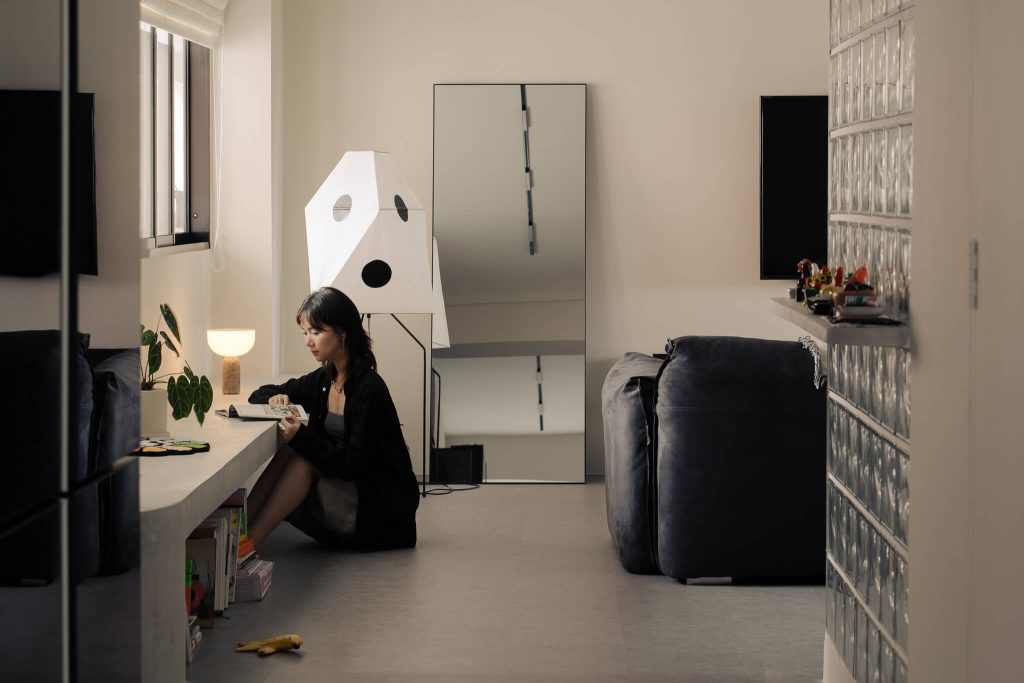
The mistakes that hurt aren't aesthetic. They're decisions made in the wrong order, money spent on the wrong half of the flat, and scope signed before selections were final. Nobody regrets a colour choice the way they regret a kitchen that fights them every evening.
These are the ones we watch repeat across projects, plus what we suggest instead. None of them require a bigger budget — most of them save money.
| The regret | What it costs | Do this instead |
|---|---|---|
| Starting works before selections are locked | Variation orders, delays | Finalise materials and layout before the first hack |
| Building in everything | S$5,000–10,000 of carpentry you'll dislike by year five | Build kitchen and wardrobes; buy the rest loose |
| Under-counting electrical points | Extension cords for a decade | 25–30 sockets in a 4-room flat, planned on the furniture layout |
| One ceiling light per room | A flat that only has one mood | Three layers: ambient, task, accent |
| Choosing on price alone | Rework, disputes, sometimes both | Compare specification per line item, not totals |
| Skipping the defects check | Free repairs that stop being free | Inspect and report before renovation starts |
What's the single most expensive mistake?
Signing off and starting site works while you're still deciding things. Every change after works begin costs more than the same change would have cost on paper, and some changes stop being possible at all once tiling or carpentry has been fabricated.
The pattern is always the same. Hacking starts on schedule because everyone wants momentum. Two weeks later the kitchen layout shifts because the fridge you finally bought is 20mm wider, and now the tiling behind it is wrong. Locking selections before the first hammer swing is unglamorous and it's the difference between a renovation that lands on budget and one that doesn't.
Why do people regret over-building carpentry?
Because built-ins are permanent, expensive, and tied to a version of your life that changes. Carpentry is commonly 30% of an HDB budget, and the pieces people regret are rarely the wardrobes — they're the built-in bed frames, dining benches and floor-to-ceiling feature walls.
Build in where the space is awkward or storage has to be maximised. Buy loose where the room is regular. A dining bench built into a corner looks generous on a rendering and stops working the first time you host seven people. Our carpentry cost breakdown shows what each item actually costs per foot run, which makes the build-versus-buy decision much easier to see.
What goes wrong in kitchen planning?
Storage gets under-estimated and the work triangle gets ignored. Kitchen regret is the most consistent theme we hear, and it's almost never about the finish — it's about not having anywhere to put the air fryer.
- Count your appliances honestly, including the ones you'll buy after moving in. Every one of them needs counter space and a socket.
- Keep the sink, hob and fridge in a workable triangle. A beautiful galley where you cross the room to rinse anything gets old in a fortnight.
- Drawers over doors for base cabinets. They cost more and they're the upgrade people thank us for most.
- Power on the island, if you're building one. An island with no sockets is a very expensive table.
- Plan the bin. Nobody designs for rubbish and everybody lives with it.
Which trendy details age fastest?
Whatever is on every feed this year: fluted panels everywhere, arched doorways, a feature wall in the trending colour. They're not bad ideas — they're bad ideas at scale.
The distinction we draw with clients: use trend-driven detail as punctuation, not as grammar. One arch that frames a genuine threshold works. Arches on every opening dates the whole flat to a season. The same goes for fluting, terrazzo and whatever replaces them next year. Materials that age well — timber, stone, honest paint — carry the room, and the trend piece sits on top where it can be changed cheaply.
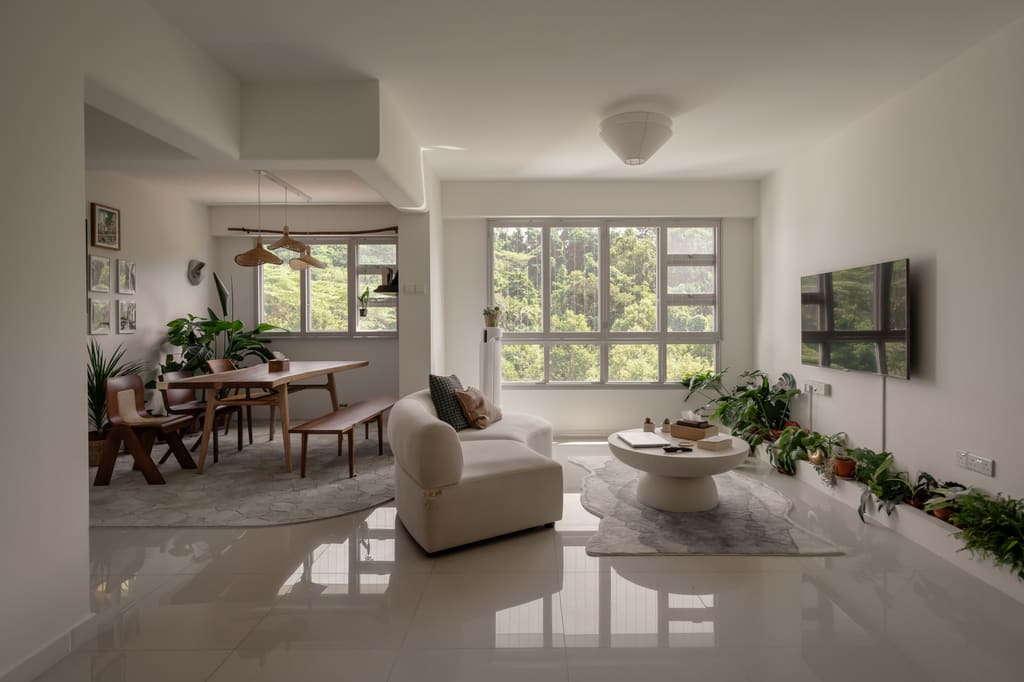
Look at how the Yishun flat holds together: pale oak, limewash, soft cove lighting. Nothing in it is chasing a moment, and it will look the same in eight years.
What do people under-spend on?
The things behind the surface: waterproofing, hardware, electrical, and lighting design. Every one of them is invisible in photos and unavoidable in daily life.
- Waterproofing — a failed membrane is your neighbour's ceiling and your legal problem. Never let it be the item that gets value-engineered.
- Hinges and runners — branded hardware outlasts generic by years on doors you open thousands of times.
- Electrical points — roughly a hundred dollars each during works, far more afterwards. See how many points a flat actually needs.
- Moisture-resistant carcass board in kitchens and near wet areas. Singapore humidity finds cheap board eventually.
Why does the lighting so often disappoint?
Because it's decided last, and one bright ceiling fixture per room is the default when nobody plans. Lighting is the cheapest thing that changes how a flat feels, and the easiest to get wrong once the false ceiling is closed.
Three layers is the working rule: ambient for the room, task where you actually do things, accent for the surfaces worth looking at. Keep colour temperature consistent — mixing warm and cool white in one room reads as a mistake even to people who can't name why. And decide it before the ceiling is built, because supply positions can't be added later without cutting.
What about choosing a firm on price alone?
The cheapest quotation usually describes less work, not the same work cheaper. Renovation sat among the top five industries for complaints logged with the Consumers Association of Singapore in 2025, and the pattern behind those complaints is familiar: thin paperwork, big deposits, and a scope nobody could verify. CaseTrust accreditation exists precisely to close those gaps.
Read quotes line by line, ask what's excluded, and check the payment terms before the design. If a firm won't put stages and specifications in writing, price stopped being the relevant question. Our guides on reading a renovation quotation and what a fair payment schedule looks like cover both.
What's the mistake nobody warns you about?
Designing for the life you imagine instead of the one you have. The gym corner that becomes storage. The formal dining set for a couple who eat at the counter. The study nobody uses because the light is wrong there in the afternoon.
The fix is boring and effective: walk a designer through your actual week. What time you get up, where you drop your bag, whether you cook on weeknights, which room you'd sit in to read. That conversation produces better plans than any Pinterest board, and it's the reason we start every project with routines rather than references.
What if you've already made one of these?
Most of them are recoverable, and the cheap fixes are better than they sound. Missing sockets can be handled with neat trunking behind carpentry or a well-placed extension solution rather than hacking a finished wall. Flat lighting improves enormously with plug-in floor and table lamps, no electrician required.
Over-built carpentry is the harder one. Removing a built-in costs money and leaves a wall to make good, so live with it a year before deciding — plenty of the pieces people hate in month two become useful once the household settles. What's genuinely worth fixing early is anything involving water, because that only gets worse.
The bottom line
Lock selections before works start, build in only where it earns its place, count your sockets, plan the light, and read the quotation properly. Do those five and you'll avoid nearly every renovation regret we hear about — and none of them cost anything except attention early on.
Ready to design your home?
Our design team will get back to you within 24 hours with a tailored proposal.