
Vinyl vs Tiles vs Laminate: HDB Flooring Costs in 2026
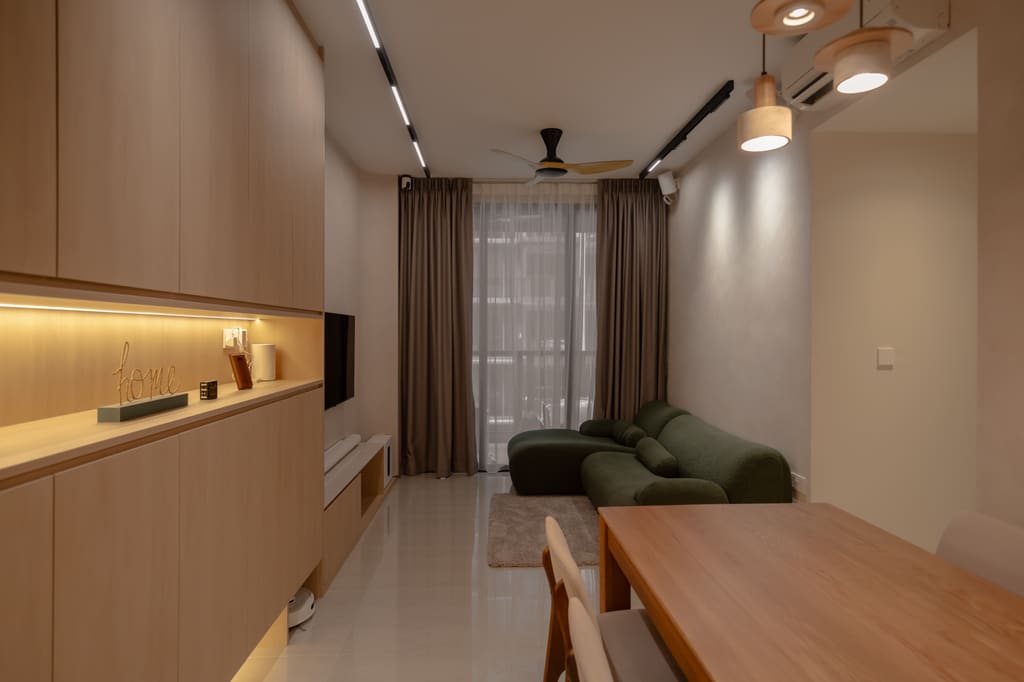
For most HDB flats in 2026, vinyl is the practical answer: S$3–9.50 per square foot supplied and installed, waterproof, and laid in a day or two. Porcelain tiles cost S$10–15 psf and last decades. Laminate is cheap and wrong for Singapore humidity. Across a 4-room flat, choosing vinyl over tiles typically saves S$5,000–8,000 all in.
That's the short version, and for a BTO it's usually the whole answer. The longer version matters if you have pets, a wet kitchen, an older resale flat, or a floor that isn't as flat as it looks.
What does each flooring type cost per square foot?
Vinyl overlay is the cheapest way to change every floor in a flat; tiles cost roughly double and add hacking on top. The figures below are supply-and-install ranges for Singapore in 2026, before any hacking or levelling.
| Flooring | Cost psf (supply + install) | Waterproof | Install time, 4-room | Realistic lifespan |
|---|---|---|---|---|
| Laminate | S$3–5.50 | No | 1–2 days | 5–8 years in SG conditions |
| Vinyl (LVT / SPC) | S$3–9.50 | Yes | 1–2 days | 10–15 years |
| Porcelain tiles | S$10–15 | Yes | 3–5 days + curing | 20+ years |
| Engineered timber | S$9–18 | No | 2–3 days | 10–20 years, refinishable |
| Marble / natural stone | S$20–40+ | Porous, needs sealing | 5–7 days | Decades, with maintenance |
For a 900 sqft 4-room flat, mid-range vinyl including screeding and skirting usually lands between S$5,500 and S$8,500 turnkey. The same floor in porcelain, with hacking and disposal of the original tiles, comfortably passes S$14,000. That gap is why vinyl dominates HDB renovations — it isn't fashion, it's arithmetic.
Why is vinyl the default for HDB flats?
It's waterproof, quiet underfoot, fast to install, and it can go straight over existing tiles without hacking. Modern SPC vinyl (stone-plastic composite) also handles Singapore's humidity swings far better than anything wood-based.
The install speed matters more than people expect. Tiling ties up your flat for the better part of a week, then needs curing time before other trades can work on top. Vinyl goes down in a day or two near the end of the programme, which is often what keeps a renovation inside its eight-to-ten-week window.
What you give up: vinyl dents under heavy point loads — a piano leg, a badly moved fridge — and once a plank is damaged, colour-matching a replacement three years later is optimistic. It also reads as vinyl at close range, however good the print film is.
What should you check before choosing a vinyl?
Wear layer thickness first, core type second, installation method third. Price differences between vinyl quotes almost always trace back to one of these, and none of them are visible in a showroom sample.
- Wear layer: 0.3mm is entry-level and scratches; 0.5mm is the sensible minimum for a home; 0.55mm and above for pets or heavy traffic.
- Core: SPC is rigid, dimensionally stable and the safer pick for Singapore. WPC is softer underfoot but expands more with heat.
- Click-lock vs glue-down: click is faster and removable; glue-down sits flatter and handles direct sun better near full-height windows.
- Thickness: 4mm and up feels solid. Thin planks telegraph every imperfection in the slab beneath.
- Screeding: ask whether levelling is included. An unlevel subfloor will show through, and fixing it later means lifting everything.
Make sure these appear as specifications on your quotation, not as the word “vinyl”. Our guide to reading a renovation quotation covers why unspecified line items are where money quietly moves.
When are tiles still the right choice?
Wet areas, kitchens that get properly used, homes with large dogs, and any flat where you want to lay the floor once and never think about it again. Tiles are still the most durable surface per dollar over a twenty-year horizon.
They're also the better call where the aesthetic depends on it. Large-format porcelain in a 600×1200 or 800×800 format gives a seamless, cool, gallery-like floor that vinyl can't quite imitate, and in a home with a strong material story that difference carries the room. Several of our condo projects use it for exactly that reason — the monochrome apartment near Bright Hill works because the floor holds its own against dark timber and marble.
The trade-offs are honest ones: harder underfoot, colder-looking in a small flat, noisier, and the grout lines need cleaning. Hacking existing tiles also generates real cost — debris disposal, a week of dust, and a floor level that shifts by whatever the new build-up measures.
Should you overlay or hack and lay?
Overlay when the existing floor is sound and level; hack when it's hollow, cracked, or you're changing the level anyway. Overlaying saves both the hacking cost and roughly a week of programme.
Tap around the flat before deciding. A hollow sound means the tile has debonded from the screed, and laying anything on top of that just moves the problem up 4mm. In resale flats we hack more often than not, because forty-year-old screed rarely passes the test — our resale renovation cost guide puts real numbers against that decision.
One practical detail: overlaying raises the floor, so doors need trimming and thresholds need thinking about, especially at bathroom entries where a lip is doing waterproofing work.
Is laminate ever worth it in Singapore?
Rarely. Laminate is fibreboard with a printed surface, and fibreboard and humidity are not friends. One mopping accident or a slow leak under a washing machine and the planks swell at the edges permanently.
Since good SPC vinyl now starts around the same price and is genuinely waterproof, the case for laminate has mostly evaporated. If you love the look of real wood, spend up to engineered timber in dry zones instead — bedrooms and living areas — and keep hard-wearing surfaces where water lives.
What about bathrooms and the HDB three-year rule?
New HDB flats come with a waterproofing membrane under the bathroom floor, and hacking those tiles within the first three years voids the warranty on it. So for a new BTO, bathroom floors are left alone or overlaid, not hacked.
Overlaying bathroom tiles is possible but adds height and needs careful detailing at the door and floor trap. Most BTO owners we work with keep the original bathroom floor, change the wall tiles if they must, and spend the money elsewhere. HDB's renovation approval guidelines set out which works need a permit before anyone starts; our permit guide translates it into what actually applies to a normal flat.
How do you match flooring across the whole flat?
Use one floor everywhere it's dry, and change material only where water or heat justifies it. Continuous flooring makes a compact flat read larger; a different floor in every room chops it into boxes.
- Pick the main floor first — living, dining, bedrooms, corridor.
- Decide wet areas separately: bathrooms, and the wet kitchen if you have one.
- Keep transitions on door lines, not in open floor, so the joint reads as intentional.
- Check the tone against your carpentry samples in daylight, not showroom light. Warm oak vinyl next to cool grey laminate cabinets is a mismatch you'll notice daily.
If you'd rather see this decided in context, our HDB interior design service works the flooring choice into the material palette rather than treating it as a line item.
The bottom line
Vinyl for most flats, tiles where durability or the look demands it, engineered timber if you want real wood in dry rooms, and laminate almost never. Specify wear layer and core type in writing, decide overlay versus hacking after tapping the existing floor, and leave a new BTO's bathroom membrane alone for the first three years.
Ready to design your home?
Our design team will get back to you within 24 hours with a tailored proposal.