
Executive Condo (EC) Renovation: What's Different (2026)
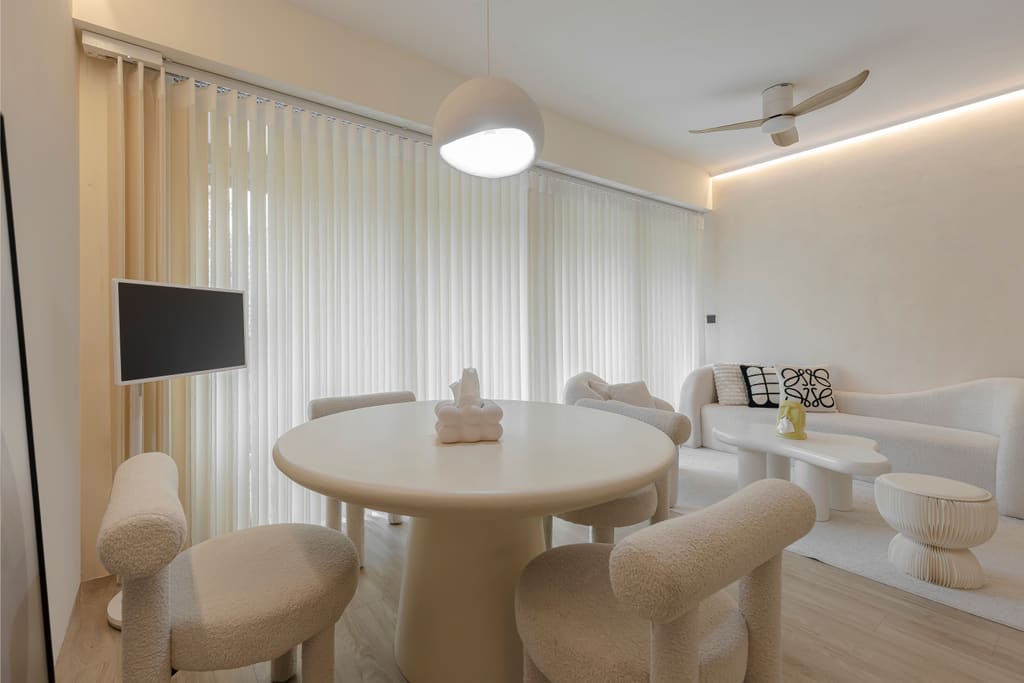
Renovating an executive condominium runs on condo rules with BTO-like economics: expect S$25,000–70,000 for a typical new EC unit — cheaper than an equivalent private resale condo because everything is new, but with MCST approval and condo working-hour limits that HDB owners never face.
We've designed several ECs, including a minimal-luxe home at Bellewaters and a collector's apartment at INZ Residences. This guide covers what actually changes when your new home is an EC — versus the BTO you almost bought, or the private condo it will legally become.
What makes an EC renovation different?
An EC is legally a strata development from day one, so renovation-wise it behaves like a private condo: MCST application, renovation deposit, restricted noisy hours and lift bookings. But because most owners renovate a brand-new unit straight from the developer, the work itself resembles a new-launch condo project — additive carpentry and finishes, not demolition. The HDB-style eligibility rules that govern who can buy an EC don't restrict how you renovate it.
How much does an EC renovation cost?
Most new EC renovations land between S$25,000 and S$70,000 — above a same-size BTO because units are larger and expectations trend higher, below a resale condo because there's nothing to undo:
- Light scope (essential carpentry, lighting, window treatments): S$20,000–35,000
- Standard scope (full carpentry, feature walls, false ceilings): S$35,000–60,000
- Extensive scope (some hacking, premium surfaces, full-home joinery): S$60,000–100,000+
The developer provides flooring, bathrooms, wardrobes and a fitted kitchen — the same keep-or-replace decision that dominates new-launch budgets. Keeping the developer's flooring alone typically saves S$10,000–18,000 in a larger EC unit. For the BTO comparison point, our BTO renovation cost guide covers those bands.
What did real EC projects focus on?
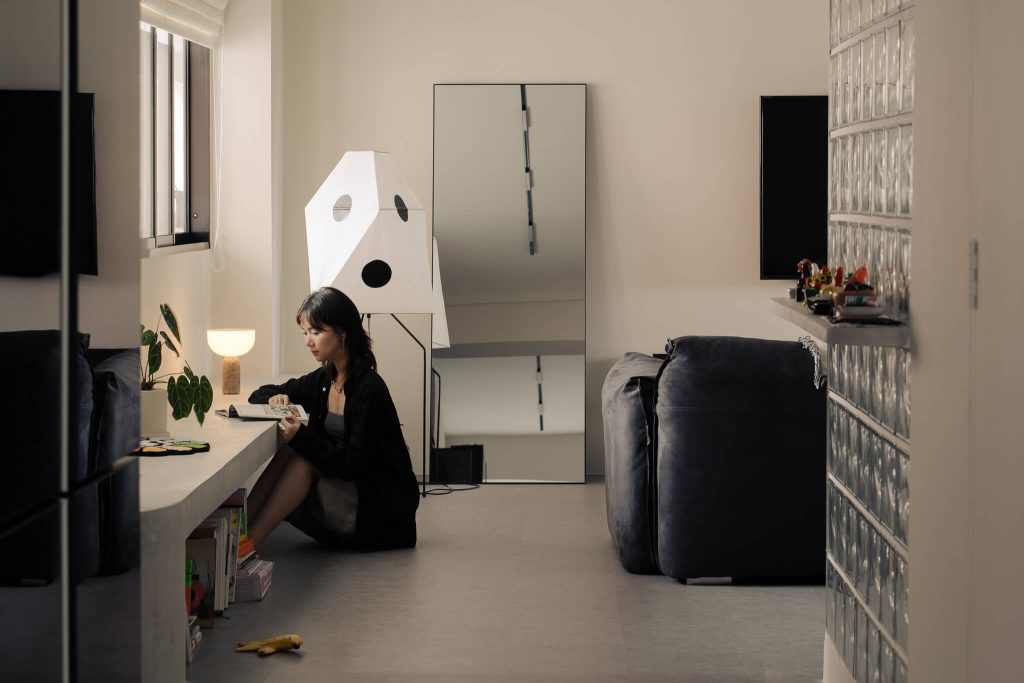
In our experience, EC budgets go furthest on storage and display carpentry — the units are family-sized, and the developer's baseline is generic. At INZ Residences, the entire scheme revolved around backlit display niches and glass cabinets for the owners' art-toy collection, layered over the developer's neutral base. At Bellewaters, the spend went into cove lighting, a mirrored vanity suite and sculptural loose furniture — almost nothing structural. Neither project hacked a single wall; both look nothing like the showflat.
What approvals and rules apply?
The MCST process, in full: application with contractor details and insurance, a S$1,000–5,000 refundable deposit, noisy works limited to roughly weekday office hours, padded-lift bookings for deliveries. New EC estates add one quirk — with dozens of units renovating simultaneously after TOP, lift slots and approval queues get congested. Applying early matters more in a new EC than anywhere else. And before any of it: do the developer defects check first — our condo defects checklist applies to ECs exactly as written.
Should you renovate an EC differently because of the MOP and privatisation?
Think in ten-year horizons. You'll hold the unit through at least the five-year Minimum Occupation Period, and the estate fully privatises at ten — which argues for renovating properly once, rather than a cheap first pass you redo at year six. Durable carpentry internals, timeless palettes and honest materials serve that timeline; hyper-trendy schemes date exactly when you can't yet sell. It's the same long-view thinking we apply across our condo interior design service.
How should you sequence an EC renovation?
- Start design 3–4 months before your projected key collection
- Do the defects inspection immediately at handover, before any works
- Submit the MCST application as soon as scope is locked — queues are longest right after TOP
- Decide the developer-finishes question (keep or replace) before quoting anything
- Get itemised quotes on an identical scope — request ours free with your floor plan
The bottom line
An EC renovation is a new-launch condo project wearing HDB-adjacent price expectations — S$25,000–70,000 for most, driven by carpentry, governed by the MCST, and best planned around the ten-year ownership arc the EC model imposes. Budget like a BTO owner, schedule like a condo owner, and design for the decade — and remember a renovation loan tops out at S$30,000, so most of an EC budget is cash either way.
Ready to design your home?
Our design team will get back to you within 24 hours with a tailored proposal.