
A&A Submission in Singapore: URA & BCA Approval Process
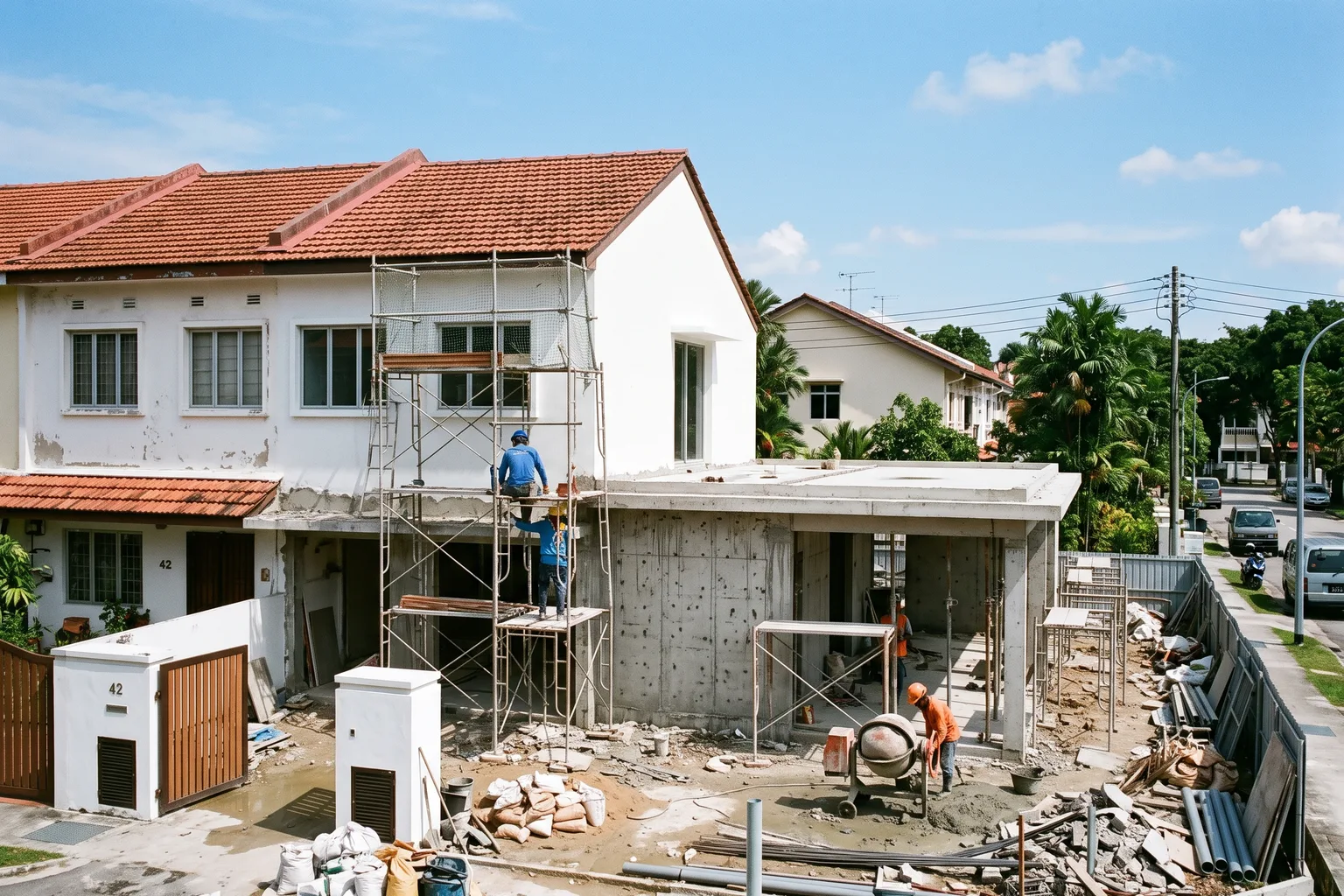
Here's the short version: A&A works on a Singapore landed home are submitted by a Qualified Person (QP) — a registered architect or professional engineer — who first secures URA Written Permission, then BCA building plan approval, and finally a Permit to Commence Building Works (PCBW) before demolition can begin. Realistically, budget three to five months for the paperwork before site works start, sometimes longer if your submission draws queries.
MET Interior runs this entire approval process for clients as part of our landed property renovation service — one team from feasibility study to handover.
You can't file most A&A works yourself, and you can't start on site the day you sign a contract. Understanding the sequence is the difference between a project that runs to plan and one that stalls for a season.
Do you need approval for A&A works?
Yes — any A&A that touches structure, gross floor area, external walls or drainage needs approval, and that covers the vast majority of real landed projects. Purely cosmetic work — repainting, re-flooring, new carpentry — generally doesn't. But the moment you extend, hack a structural wall, or add an attic, you're in submission territory. When in doubt, assume you need it; the penalties for unauthorised structural works aren't worth the gamble. Our overview of what A&A work involves explains which jobs typically qualify.
Who submits: the Qualified Person
Every structural A&A submission goes through a QP — an architect registered with the Board of Architects, and where structure is involved, a professional engineer too. The QP prepares the drawings, files with the authorities, answers their queries, and takes professional responsibility for compliance. Your interior designer and contractor work alongside the QP, but they can't replace them for statutory submissions. On most MET landed projects, we coordinate directly with your appointed QP so the design intent survives approval intact.
Step by step: URA, BCA and PCBW
Approval runs in a fixed order — you can't get a BCA building plan approved before URA has granted Written Permission on the scheme.
| Stage | Who | What happens | Typical time |
|---|---|---|---|
| 1. Design & drawings | QP + designer | Scheme design, GFA checks, drawing set frozen | 4–8 weeks |
| 2. URA Written Permission | Architect QP | Development application; may draw a query (RFI) round | 6–12 weeks |
| 3. BCA Building Plan | Architect + P.E. | Plan-check against the Building Control Act; may draw a reject-and-resubmit round | 2–3 rounds of 14–28 working days |
| 4. PCBW | QP + builder | Permit to Commence Building Works issued; site works begin | After BCA approval |
Only once the PCBW is in hand can demolition and construction legally start. Slot that in front of the on-site phases in our landed renovation timeline and you'll see why landed projects feel front-loaded with waiting.
What goes into an A&A submission?
Your QP assembles a set that URA and BCA can assess against the rules. For a typical landed A&A that means existing and proposed layout plans, elevations and sections; a GFA computation showing you're under the 50% cap; a site plan with setbacks; and structural drawings and calculations from the professional engineer wherever structure is affected. Conservation properties carry extra heritage documentation. You don't prepare any of it yourself — but knowing the set exists explains why the drawing stage runs four to eight weeks, and why changing your mind after the freeze gets expensive.
How long does A&A approval take in Singapore?
Count on roughly 3–5 months from a frozen drawing set to PCBW, and longer if the scheme is complex or sits in a conservation area. URA Written Permission commonly clears in one to two rounds; each query adds four to eight weeks. BCA's first plan-check response takes about 14–28 working days, and a large share of submissions get a reject letter on the first pass, adding another round of the same length. None of this means anything's wrong — it's the normal rhythm of a landed submission, and building it into your plan up front keeps you calm when the first query lands.
Can you start work while waiting for approval?
Not for anything structural. You can use the approval window well — finalising the interior design, selecting finishes, and locking the drawing set — but demolition, hacking and extension works must wait for the PCBW. Owners who try to start early on structural works risk stop-work orders and having to reinstate. The safe sequence is simple: design and select during approvals, build after.
Why submissions get delayed
Most delays are avoidable and come from the same handful of issues:
- Breaching the envelope. Setbacks, height and attic rules under URA's envelope control are the usual trip-ups.
- Missing the 50% line. A scheme that quietly exceeds the 50% GFA cap gets bumped from A&A into reconstruction, a different and heavier submission.
- Drainage and setback issues that weren't picked up before filing.
- Incomplete drawing sets that trigger avoidable query rounds.
Knowing what A&A actually permits before you design saves the most time — we cover the boundaries in what A&A works can and can't do.
Where MET fits in
We're the interior design and build partner, not your QP — but we've run enough landed projects to design within what will actually clear approval, and to keep the paperwork moving. On our landed work, we align the design to URA's envelope and the 50% rule from the first sketch, so the QP isn't redrawing the scheme after a rejection. If you want that coordination handled end to end, that's what our landed interior design service is built for. For the wider set of questions owners ask, our landed renovation FAQ is a good next read.
The bottom line
A&A submission is a sequence, not a single form: QP-led, URA first, BCA second, PCBW before you build. Three to five months of approvals is normal, and the fastest way through is a scheme designed to comply before it's ever filed. Start the QP conversation early — the approval clock, not the construction, is usually what sets your move-in date.
Ready to design your home?
Our design team will get back to you within 24 hours with a tailored proposal.